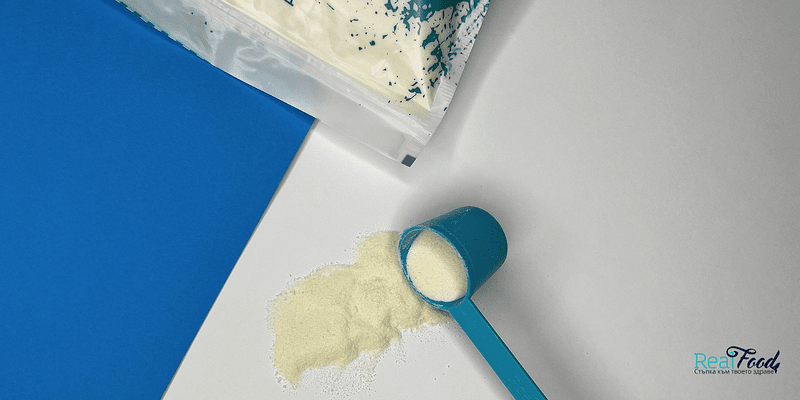
Questions like „Do I need to take a break from collagen?“, „How long should I take collagen for?“ and „Are there any side effects?“ come up almost every day. In this article we'll answer them in a bit more detail and explain not only why you don't need to stop taking collagen, but quite the opposite – why it deserves a place in your daily routine and why it's best not to skip it.
Before we begin, we want to clarify that what we say here is based on clinical studies and their results, tracked over time, and that if a doctor has prescribed an individual collagen regimen in a specific case, it's important to follow the advice of your treating specialist.
Collagen Is a Natural Component of the Body
Naturally, each of us has collagen in our body – it's a building block of all organs and systems and acts as a „binding element“ of our connective tissue, keeping cells well-hydrated for longer. It's the most abundant protein in the human body, shown to make up about 30% of the total.
As we age, the body speeds up the rate at which it breaks down collagen – so the amount decreases and the quality starts to deteriorate. After around age 25, a person begins losing an average of 1% of their collagen per year, and this figure grows with each passing year. The amounts vary from person to person due to different lifestyles and genetic factors, but it's a substance worth maintaining and caring for daily in order to notice an effect in the near future.
When we notice our collagen levels starting to decline, it's a good idea to give our body a little „help“ by supplying it from outside sources. Since it would be hard to get enough collagen every day from protein-rich foods alone, collagen in supplement form is the optimal option. It comes with a carefully calculated dosage and is usually offered in a concentrated, clean formula. Hydrolyzed collagen supplements maintain normal protein levels in the body as well as boost its own natural production. Taking it shouldn't be a shock to the system, nor anything unfamiliar, since (as we mentioned) it's already something our body synthesizes.
What Happens to Your Body When You Stop Taking Collagen?
As with anything we do to improve our health and lifestyle, taking collagen also requires consistency. A body of studies shows that, on average, it takes 4 to 12 weeks of daily collagen intake to notice an effect on skin elasticity and hydration, and on average 8 to 24 weeks to see a positive change in cellulite formation and skin aging.
Based on this fact, we can see just how much persistence and consistency are needed to maintain optimal collagen levels. Now imagine a scenario where you stop taking your collagen for a few days – if your body has started achieving some results, it will need more protein to maintain them…but there won't be any more. The depletion of collagen reserves will resume, and the effects may start to fade. This study shows that taking collagen (bovine, porcine, chicken, and fish were tested) over a longer period (more than 8 weeks) is much more beneficial for skin condition compared to a shorter intake period (under 8 weeks).
How Long After Stopping Collagen Does the Accumulated Effect Last?
This is strictly individual. Factors such as duration of intake, amounts, age and others come into play. This clinical trial looked at a group of people, who were given collagen peptides every day for 24 weeks, and then took a break. In 88% of them, the improvement achieved in the condition of their nails (greater strength and density) was maintained for up to 4 weeks after stopping the protein. This observation is repeated in other lab-based observations as well, though of course we can't draw general conclusions from them, since every person moves at their own „pace“.
Can You Overdose on Collagen?
The opposite of taking periods without collagen is taking it in larger amounts than the recommended daily dose. Sometimes this can happen by accident or simply forgetting, but is it dangerous?
Since collagen itself is a protein that our body naturally synthesizes, taking more of it than usual shouldn't pose a threat to our health. Of course, this applies to supplements offering fully natural collagen, and we can't vouch for the composition of every collagen product on the market.
Collagen is a protein, and in large amounts it can put a strain on the kidneys due to the presence of oxalates. That's why we recommend that people with kidney problems, and those who notice a diuretic effect from collagen, cut the recommended daily dose in half. The daily dose of RealFood Hydrolyzed Collagen is 10 grams, or two scoops.
Proteins have the property of keeping hunger at bay for longer, so if taken in a larger amount, collagen may increase the feeling of fullness, as well as make any residual collagen aftertaste a bit more noticeable, if a person even notices one at all. In short – it shouldn't be a problem if we occasionally take a little extra collagen.
In Conclusion
Collagen is the element that keeps everything in our body in place. Caring for and maintaining its levels in our system is of primary importance for the condition of our skin, nails, hair, joints, muscles and, generally speaking – our connective tissue. A „pause“ or fully stopping collagen intake can diminish or even reverse the good effects we've achieved so far. In some people the effect may take longer to fade, so it's good to pay attention to your body and stay consistent. *
*Of course, if any intolerance or discomfort occurs, we recommend scheduling a consultation with a specialist for the exact resolution of your case.