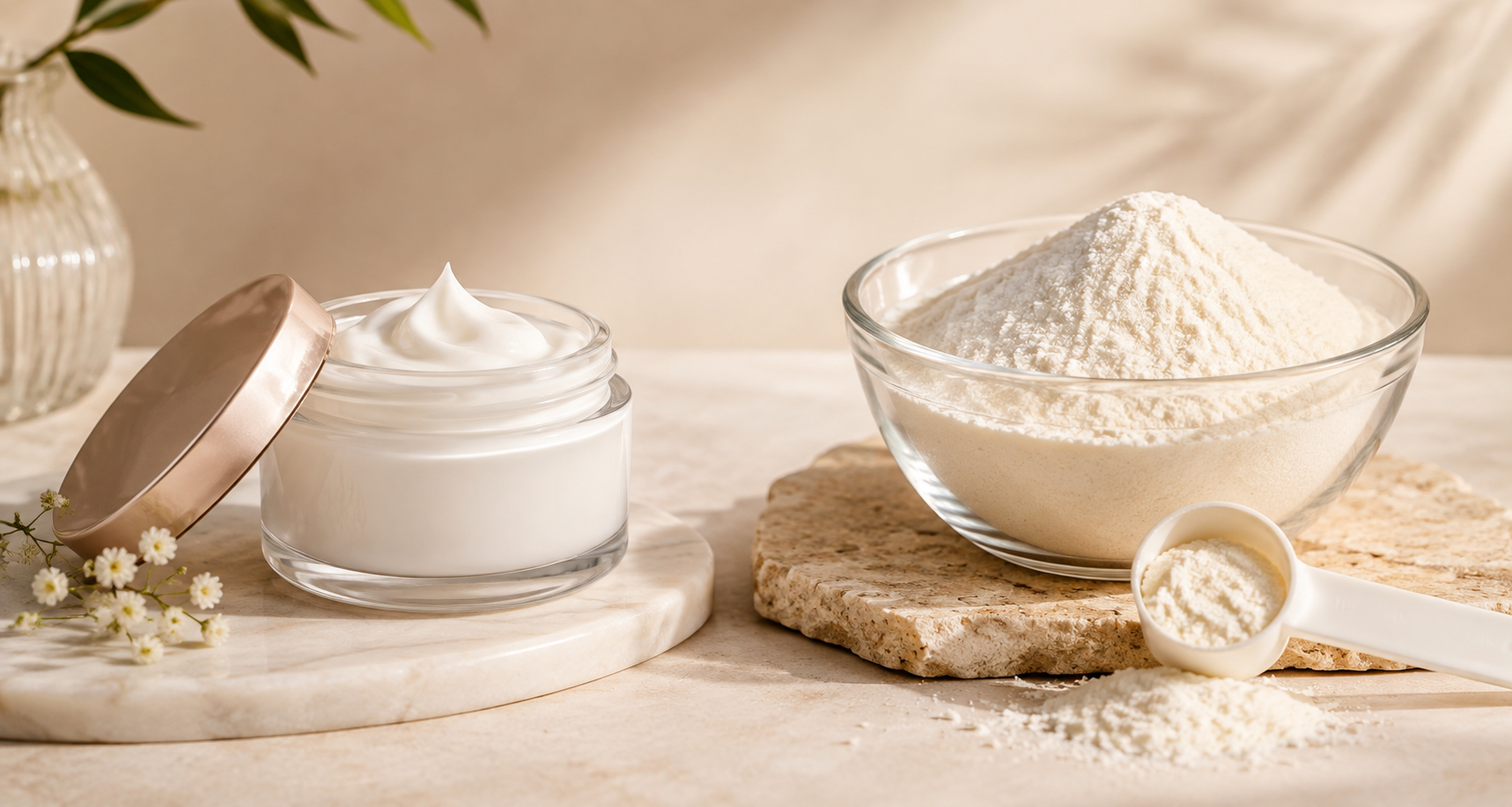
Collagen to drink or a collagen cream – which one actually works better? The question sounds simple, but the answer isn't just “one or the other.”
Creams and dietary supplements with collagen have a different way of being applied and a different role. One takes care of the skin from the outside, while the other supplies collagen peptides through nutrition.
That's why, instead of putting them in direct competition, it's more useful to understand how they work, what we can realistically expect from them, and where they differ.

Take a step toward your health with RealFood
Explore our full collection of products that support your balanced everyday routine.
See all products →✓ Clean formulas ✓ Minimal ingredient lists ✓ Premium dietary supplements
Why is collagen so important?
Collagen is a key structural protein in the human body. It is part of the structure of skin, bones, tendons, joint structures and other connective tissues.
Over time, the natural synthesis and content of collagen in the skin change. This is one of the reasons why topics such as loss of elasticity, the appearance of fine lines and changes in skin structure gradually become more and more relevant.
And here comes the big question: can we simply apply collagen onto the skin, or is it better to take it internally?
The answer starts with how the two categories of products reach the body.
Collagen cream: care from the outside
Collagen creams and serums are applied directly to the skin. Their main advantage is precisely their local action – the formula reaches exactly the area it's applied to.
However, the collagen molecules in many cosmetic products are relatively large, which limits their penetration into the deeper layers of the skin. That's why the effect of classic collagen creams is associated mainly with hydration and improving the feel and appearance of the skin's surface.
As cosmetic technologies advance, formulas with lower molecular weight collagen peptides are also appearing. A 2022 study, for example, reported improvements in hydration, elasticity and fine lines after four weeks of applying a micronized collagen cream twice daily.
Does this mean collagen creams don't work?
No. They just work in a different way.
If your goal is local skin care, a good cosmetic routine has its place. But it is not equivalent to taking hydrolyzed collagen.
How does drinking collagen work?
With dietary supplements, the approach is different.
Hydrolyzed collagen has already been broken down beforehand into smaller peptides. After intake, they pass through the digestive system, where they are broken down further and absorbed as peptides and amino acids.
And this is exactly where one of the main differences between the cream and the collagen powder lies:
the cream is applied locally → collagen peptides are taken in internally
Studies on the oral intake of collagen peptides look at their potential application for skin-related indicators, including hydration, elasticity, density and structure.
Collagen, however, isn't part of the skin alone. It is also present in a number of connective tissues, which is why the scientific literature also studies the intake of collagen peptides in the context of joints and other structures of the musculoskeletal system.
RealFood products fit easily into your daily routine and support your body from within.
Collagen powder or cream: the main differences
The easiest way to compare them is by how they work.
Collagen cream:
- applied directly to the skin
- has local application
- can support hydration and the feel of smoother skin
- its effect depends on the specific formula and the area of application
Hydrolyzed collagen for intake:
- taken orally
- contains smaller collagen peptides
- delivers amino acids and peptides through the digestive system
- can easily be added to everyday meals and drinks
- its effects are studied not only in relation to skin, but also to other connective tissues
That's why the question “Collagen to drink or cream?” doesn't necessarily have one winner.
It's more accurate to say these are two different approaches to caring for the skin and the body.
Can cream and drinkable collagen be combined?
Yes – and this is exactly where the “cream vs. collagen” debate starts to lose its meaning.
Daily cosmetic care can focus on the skin barrier, hydration and protection from the outside. Taking collagen peptides, on the other hand, is a nutritional approach that delivers specific amino acids and peptides from within.
Self-care isn't just one product or one step.
It's a combination of consistency, balanced nutrition, adequate protein intake, movement, sleep, sun protection for the skin, and habits you can actually keep up.
Which drinkable collagen should you choose?
If you decide to add collagen to your daily routine, pay attention not just to the attractive packaging or the promises on it.
Look for hydrolyzed collagen, a clear origin and a formula you can easily take every day.
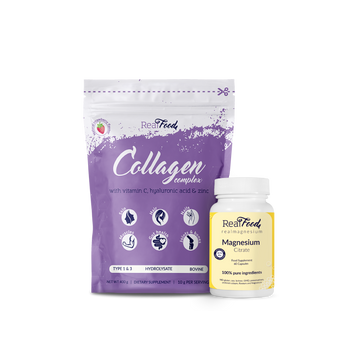
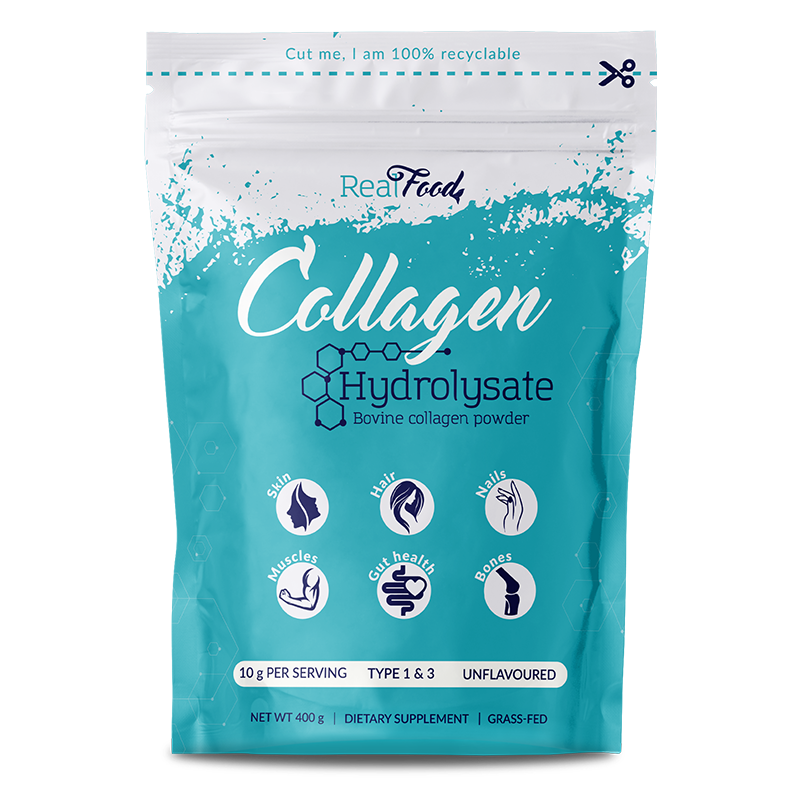
That's exactly what RealFood collagens are – with a clean, practical formula for daily intake:
- hydrolyzed collagen
- from pasture-raised calves
- no artificial flavors or fragrances
- no sweeteners
- easy to add to coffee, water, smoothies or another favorite drink
- easily soluble
Because the best routine is the one you can actually turn into a habit.


When should you drink collagen?
One of the most frequently asked questions is “When should you drink collagen?”
Intake doesn't need to be turned into a complicated ritual. What matters more is finding a time of day that lets you stay consistent – for example, with your morning coffee, in a smoothie, or as part of another daily routine.
Consistency itself is an important factor in clinical studies on collagen peptides, which usually look at effects after weeks or months of regular intake, not after one or two doses..
So – cream or drinkable collagen?
You don't need to pick a side.
Cream is part of local skin care, while hydrolyzed collagen is part of the nutritional approach from within. The two products have different roles and can comfortably be part of one, more complete routine.
If your goal is to add collagen peptides to your daily routine, choose a product with a clear composition, quality origin, and a format that won't end up forgotten in the cupboard after the third day.
Sources
-
Seong, S. H. et al. Low-molecular-weight Collagen Peptides Supplement Promotes a Healthy Skin: A Randomized, Double-blinded, Placebo-controlled Study. Journal of Cosmetic Dermatology 23, 554–562 (2023). https://doi.org/10.1111/jocd.16026
-
Rustad, A. M., Nickles, M. A., McKenney, J. E., Bilimoria, S. & Lio, P. A. Myths and Media in Oral Collagen Supplementation for the Skin, Nails, and Hair: A Review. Journal of Cosmetic Dermatology 21, 438–443 (2021). https://doi.org/10.1111/jocd.14567
-
Gold, M. H., Biron, J., Wilson, A. & Nelson, D. B. Efficacy and Tolerability of a Hyaluronic Acid-based Serum and a Peptide-rich Cream for the Face and Neck in Subjects With Photodamaged Skin. Journal of Cosmetic Dermatology 21, 3458–3463 (2022). https://doi.org/10.1111/jocd.14981
-
Lubart, R. & Lipovsky, A. Immediate and Long Term Clinical Benefits of a Novel Topical Micronized Collagen Face Cream. Journal of Cosmetics, Dermatological Sciences and Applications 12, 153–163 (2022). https://doi.org/10.4236/jcdsa.2022.124013.
-
Lin, C.-R. et al. Analgesic Efficacy of Collagen Peptide in Knee Osteoarthritis: A Meta-Analysis of Randomized Controlled Trials. (2023). https://doi.org/10.21203/rs.3.rs-3138309/v1
-
Larder, C. E., Iskandar, M. M. & Kubow, S. Gastrointestinal Digestion Model Assessment of Peptide Diversity and Microbial Fermentation Products of Collagen Hydrolysates. Nutrients 13 (2021). https://doi.org/10.3390/nu13082720
-
Wakeman, M. A Review of the Literature Relating to Collagen Hydrolysate and Its Potential Clinical Applications. Journal of Advances in Medicine and Medical Research (2021), 6–20. https://doi.org/10.3390/nu13082720
-
Avila Rodríguez, M. I., Rodriguez Barroso, L. G. & Sánchez, M. L. Collagen: A review on its sources and potential cosmetic applications. Journal of Cosmetic Dermatology 17, 20–26 (2018). https://doi.org/10.9734/jammr/2021/v33i1530981
-
Bolke, L., Schlippe, G., Gerß, J. & Voss, W. A Collagen Supplement Improves Skin Hydration, Elasticity, Roughness, and Density: Results of a Randomized, Placebo-Controlled, Blind Study. Nutrients 11 (2019). https://doi.org/10.3390/nu11102494