









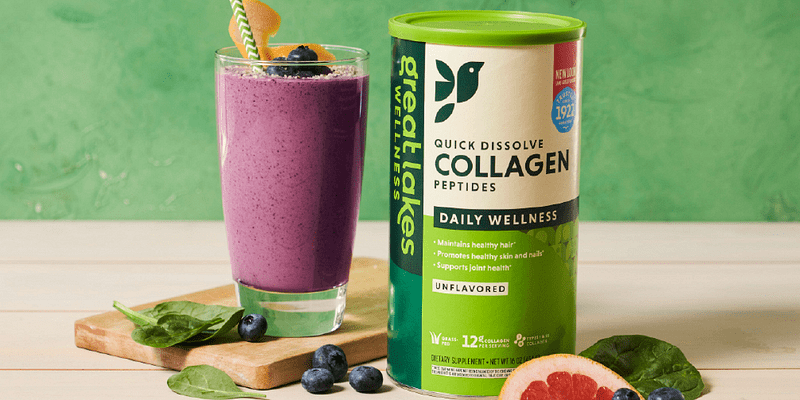
Collagen peptides (also known as hydrolyzed collagen) are rapidly taking over the cosmetics industry, causing quite a stir thanks to their remarkable ability to influence skin elasticity. Fans of the healthy lifestyle are equally captivated by collagen’s ability to support post-workout recovery and joint health, but the question remains – is this trendy claim actually backed up? It turns out the answer is – absolutely yes!
Collagen makes up about 30% of all the proteins in our bodies, which makes it the most abundant protein our body has. It acts like a “glue” for our tissues and tendons and can be found in every part of the body: from the bones to the gut, even in the brain.
Unfortunately, the natural aging process leads to a slowdown in our body’s collagen production. All of us are affected by this process and its results, such as sagging skin, stiff joints, and other unwelcome effects. Fortunately, there’s a wide variety of foods rich in collagen peptides that can support your body’s natural collagen production. The market also offers many ready-made collagen supplements, such as the certified, clinically tested hydrolyzed collagens from RealFood or Great Lakes, which you can find on our site.
Here’s how collagen peptides can benefit your health, both inside and out.
Slowing Down the Signs of Aging
The most popular use of collagen relates to skincare, as a way to fight the signs of aging, which is completely understandable. It’s a supplement that helps improve skin elasticity. Various studies show that taking collagen supplements leads to smoother skin after just four weeks of use, while wrinkles show visible improvement after eight weeks. That’s why collagen is a must-have supplement for anyone striving to keep their skin looking young.
Healthier Hair and Nails
Collagen is rich in amino acids, which our bodies use to produce keratin, the main protein that makes up our hair and nails: important information for anyone struggling with slow-growing hair and nails. Collagen can support your body’s natural growth process and give you longer, shinier locks, as well as strengthen brittle nails. No wonder beauty experts just can’t stop recommending it!
Joint Health
Collagen can help support the health of your joints and the function of cartilage, which deteriorates with age. This is because, over time, the body reduces its production of the collagen that lubricates the joints, and we depend on it both to preserve our joints and to keep our ligaments and tendons flexible. Getting collagen through food or as a supplement is an excellent way to maintain your mobility and flexibility for longer.
Better Post-Workout Recovery
The high amino acid content in collagen supplies the body with the substances that help your muscles recover and rebuild faster. This is great for anyone who’s constantly on the move!
Remember, collagen is a natural source of protein. If you’re tired of endlessly sifting through the sea of artificial protein supplements to improve your athletic performance, then collagen is the solution you need.
Sources of Collagen
Now that you know about collagen’s amazing benefits, you’re probably wondering how to get more of it. Although the body’s collagen production declines over the years, there are many ways to obtain it naturally.
You can make up for the deficit with the range of collagen peptides from Great Lakes or RealFood, but if you’re looking for a way to get more collagen through food, there are many sources that can help your body’s natural collagen production, namely:
- Meat proteins – beef and chicken are excellent sources in this regard
- Fish and seafood – fish and mussels are high in important amino acids
- Dairy products and eggs – although they contain no collagen themselves, these foods are also rich in amino acids involved in your body’s collagen production
- Fruits and vegetables – stimulate the body’s natural collagen production thanks to their high content of vitamin C and certain amino acids
- Spirulina – the superfood that, on top of having some of the highest nutritional values, also contains glycerin and proline – two of the most important amino acids linked to collagen production
- Bone broth – like human bones, animal bones are also high in collagen, making them one of the best sources for obtaining this valuable substance
- Collagen supplements – there are thousands of ways to get collagen, but undoubtedly the most optimal and convenient one is in the form of dietary supplements specially designed for this purpose
Despite all these ways to get more collagen through food, the most efficient way to obtain it is through direct supplementation. There are many such products on the market, but our recommendations are the already well-established collagens from RealFood and Great Lakes.
What makes them so special? They’re produced directly from the hide and bones of pasture-raised cattle, which makes them high-quality and clean sources of hydrolyzed collagen. Hydrolyzed collagen is processed by the body more easily than gelatin and other forms of collagen. On top of that, this product is naturally free of any taste or smell.
Since this is a natural protein, collagen sourced from pasture-raised animals is an excellent alternative to artificial protein powders and shakes. Unlike the synthetic ingredients that can be found in protein supplements, collagen is clean and non-GMO. It’s a kosher food, gluten-free, and suitable for any type of diet, including keto and paleo.
Conclusion
As you’ve seen, there’s no shortage of natural ways to add collagen to your diet. While collagen is best known as the secret beauty ingredient that slows the signs of aging, it’s beneficial for every part of your body. Regardless of age, everyone benefits from getting more collagen.
But since we know there’s no better argument than personal experience, here you can read more reviews about the effects of collagen, shared by people who are already enjoying the benefits of taking it regularly.



