Collagen is everywhere – in powder, in capsules, in cosmetics, in drinks and various supplements. But the logical question remains: does it actually work?
The short answer is: yes, but not every collagen, and not with just any way of taking it.
For it to make a difference, collagen needs to be in the right form, in a sufficient dose, and taken consistently. This is exactly where the difference lies between plain „collagen“ and hydrolyzed collagen, which the body can absorb more easily.
🌟 40,000+ customers drink RealFood collagen every day
„After 30 days my skin changed completely” – Milena, customer
Start your collagen routine with RealFood →✓ Free shipping ✓ Clinically tested ✓ Made in Bulgaria
What is collagen and why do we lose it?
Collagen is the most abundant protein in the human body. It is part of the structure of the skin, cartilage, tendons, nails, and hair. We can picture it as a network that supports the strength, elasticity, and resilience of tissues.
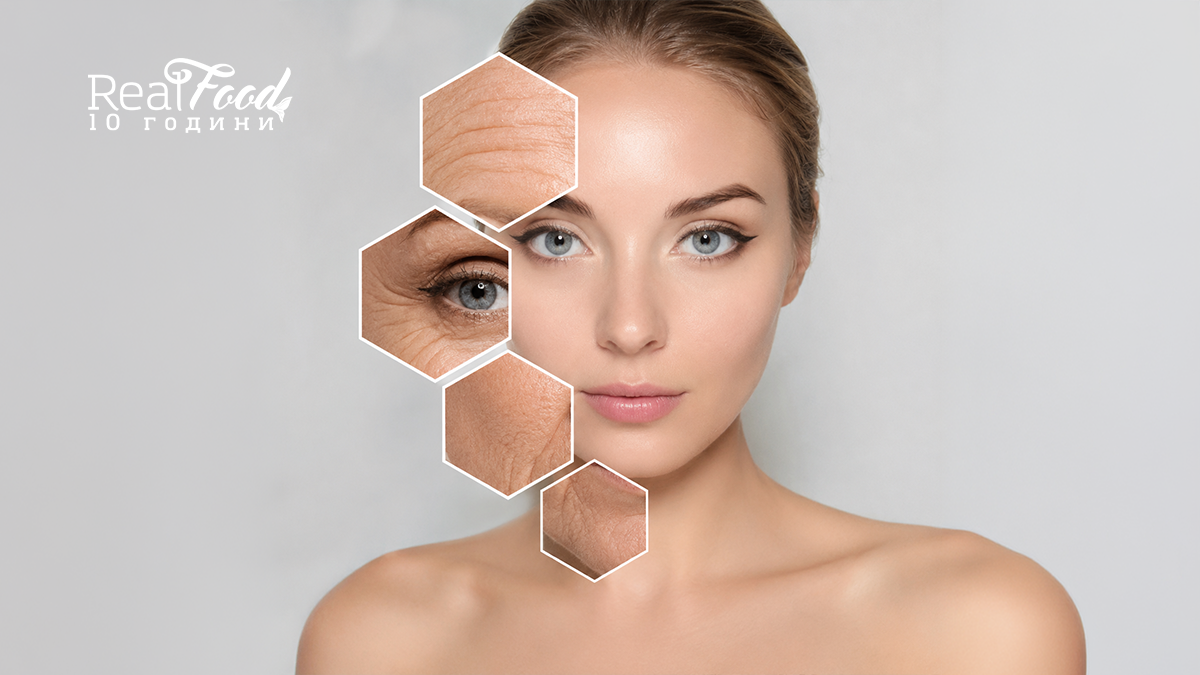
Over time, the body's natural collagen synthesis decreases. This process usually begins after age 25 and is gradually felt through changes in the skin, hair, nails, and joint comfort.
That is why taking quality collagen can be a good daily support – especially when it is part of a comprehensive self-care routine.
Does collagen work? What science says
It's important to make one distinction: Not all collagen is the same.
Regular collagen has larger molecules that the body must first break down. With hydrolyzed collagen, also known as collagen peptides, the molecules are already broken down into smaller particles. This makes it easier to take and absorb.
Studies show that specific collagen peptides can support the processes related to the body's own collagen synthesis.
A 2021 meta-analysis, published in International Journal of Dermatology, reported improvement in skin hydration and elasticity with collagen peptide intake over a period of around 90 days.
Other studies look at hydrolyzed collagen intake in connection with joint comfort and mobility, especially in active people and those under daily physical strain.

Expert opinion
„On average, we start losing collagen as early as age 25.“
— Dr. Silvia Paskaleva, physiotherapist and dietitian
What can collagen actually help with?
Skin
This is one of the best-studied areas. Regular intake of collagen peptides is associated with support for:
- skin hydration
- elasticity
- a smoother, fresher look
- the skin's natural repair processes
It's important to know: the effect isn't instant. It usually takes at least 8–12 weeks of regular intake to feel a real difference.
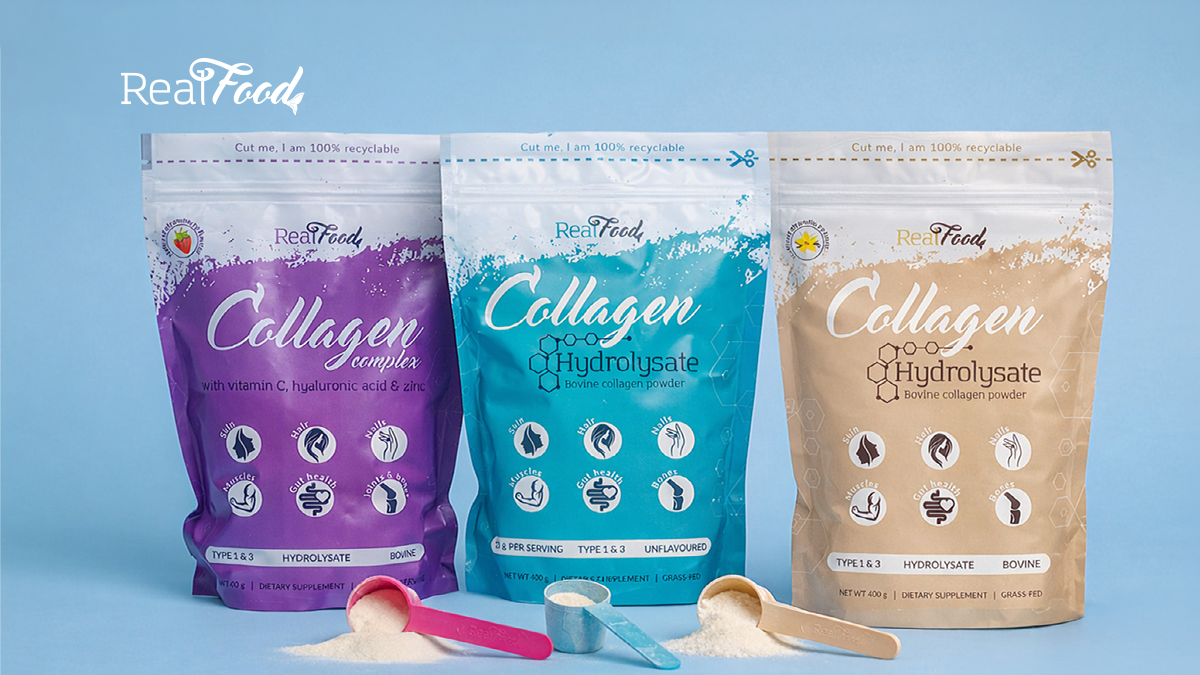
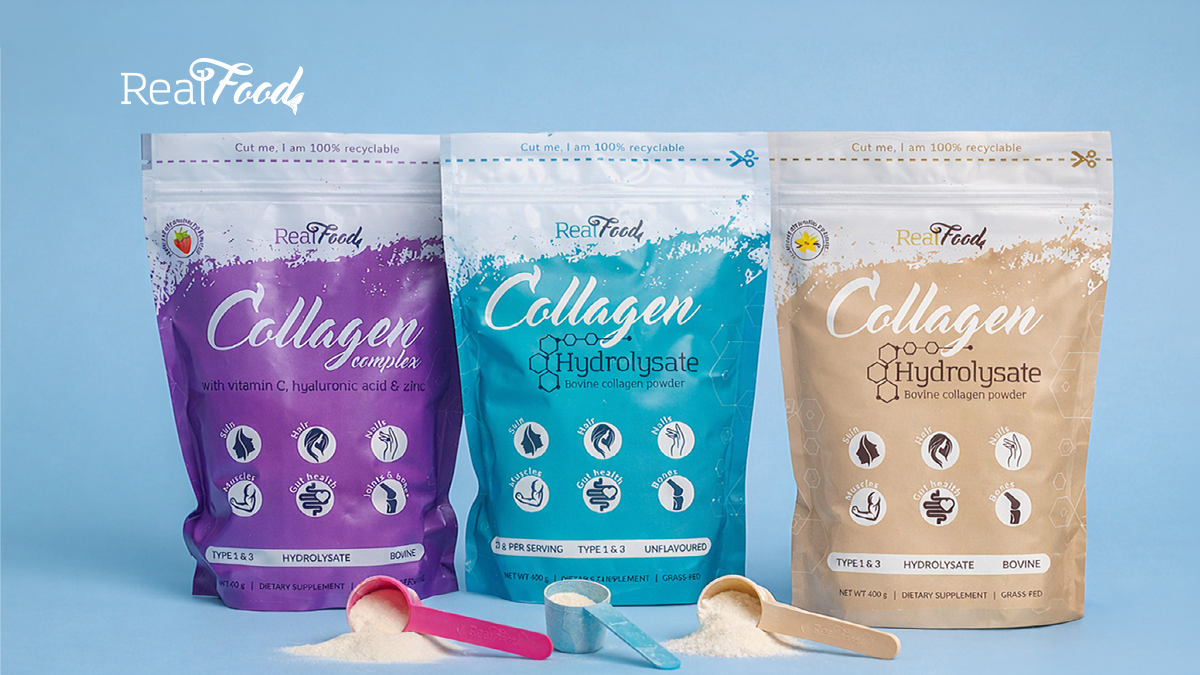
RealFood Collagen Complex combines collagen, hyaluronic acid, vitamin C, and zinc – everything you need for your daily care from the inside out.

Joints and an active lifestyle
Collagen is a natural part of cartilage and connective tissue. That is why it is suitable for people with an active lifestyle, those who exercise, or those who want to support their joint comfort in everyday life.
Hair and nails
Collagen supplies amino acids that are important for the structure of hair and nails. Although this area is less studied compared to skin, regular intake can be part of an overall routine for healthy, well-maintained looks.
When does collagen not deliver the expected result?
Even a quality product may fail to give the desired effect if:
- it's taken irregularly;
- the dose is too low;
- the form isn't the right one;
- you expect results within a few days;
- your diet and lifestyle don't support the process
Collagen isn't magic. It works best as a daily habit – a small but consistent step toward better health.
How to choose the right collagen?
When choosing a collagen, pay attention to a few things:
- it should be hydrolyzed collagen or collagen peptides;
- it should have a clear dose per serving;
- it should have a clean composition;
- it shouldn't have unnecessary sweeteners, fillers, or unneeded additives;
- it should be easy to take every day.
Hydrolyzed RealFood collagen is unflavored and unscented, has no sweeteners, and comes from grass-fed cattle. It's suitable for adding to coffee, smoothies, water, yogurt, or your favorite snack – without changing the taste.

What to remember from this article
Yes – when it's high quality, hydrolyzed, in the right dose, and taken regularly.
It isn't a quick fix and it doesn't promise miracles. But it's one of the most practical supplements you can add to your daily routine if you want to support your skin, hair, nails, joints, and that feeling of care from the inside out.
Frequently Asked Questions
Does collagen work?
Yes, when it's hydrolyzed, taken regularly, and in a sufficient daily dose.
How long until you see results?
Usually between 8 and 12 weeks with daily intake.
When should you take collagen?
It doesn't matter whether it's morning or evening. What matters most is taking it every day.
What's the difference between regular and hydrolyzed collagen?
Hydrolyzed collagen has been broken down into smaller peptides and is absorbed more easily by the body.
Should I take vitamin C with collagen?
Vitamin C is involved in the body's natural collagen synthesis and pairs well with collagen supplements.
Is collagen suitable for active people?
Yes, collagen is a popular choice among people with an active lifestyle who want to support their joints and recovery.
Can collagen be taken long-term?
Yes, collagen is often taken as part of a daily routine for skin, hair, nails, and joints.
Which collagen should I choose?
Look for hydrolyzed collagen with a clean composition, a clear origin, and a sufficient daily dose.
- Proksch E. et al. (2014). Oral Supplementation of Specific Collagen Peptides Has Beneficial Effects on Human Skin Physiology: A Double-Blind, Placebo-Controlled Study. Skin Pharmacology and Physiology. https://www.researchgate.net/publication/255957972
- Kumar S. et al. (2015). A double-blind, placebo-controlled, randomised, clinical study on the effectiveness of collagen peptide on osteoarthritis. Journal of the Science of Food and Agriculture, 95(4), 702–707. https://onlinelibrary.wiley.com/doi/full/10.1002/jsfa.6752
- Shaw G. et al. (2017). Vitamin C-enriched gelatin supplementation before intermittent activity augments collagen synthesis. American Journal of Clinical Nutrition, 105(1), 136–143. https://ajcn.nutrition.org/article/s0002-9165(22)04737-2/fulltext