Sucralose, stevia, erythritol and more – how they affect your health
It's common knowledge that regular sugar has an unfavorable effect on our bodies on a daily basis, and in the long run it can lead to problematic, and in some cases even very dangerous, consequences.
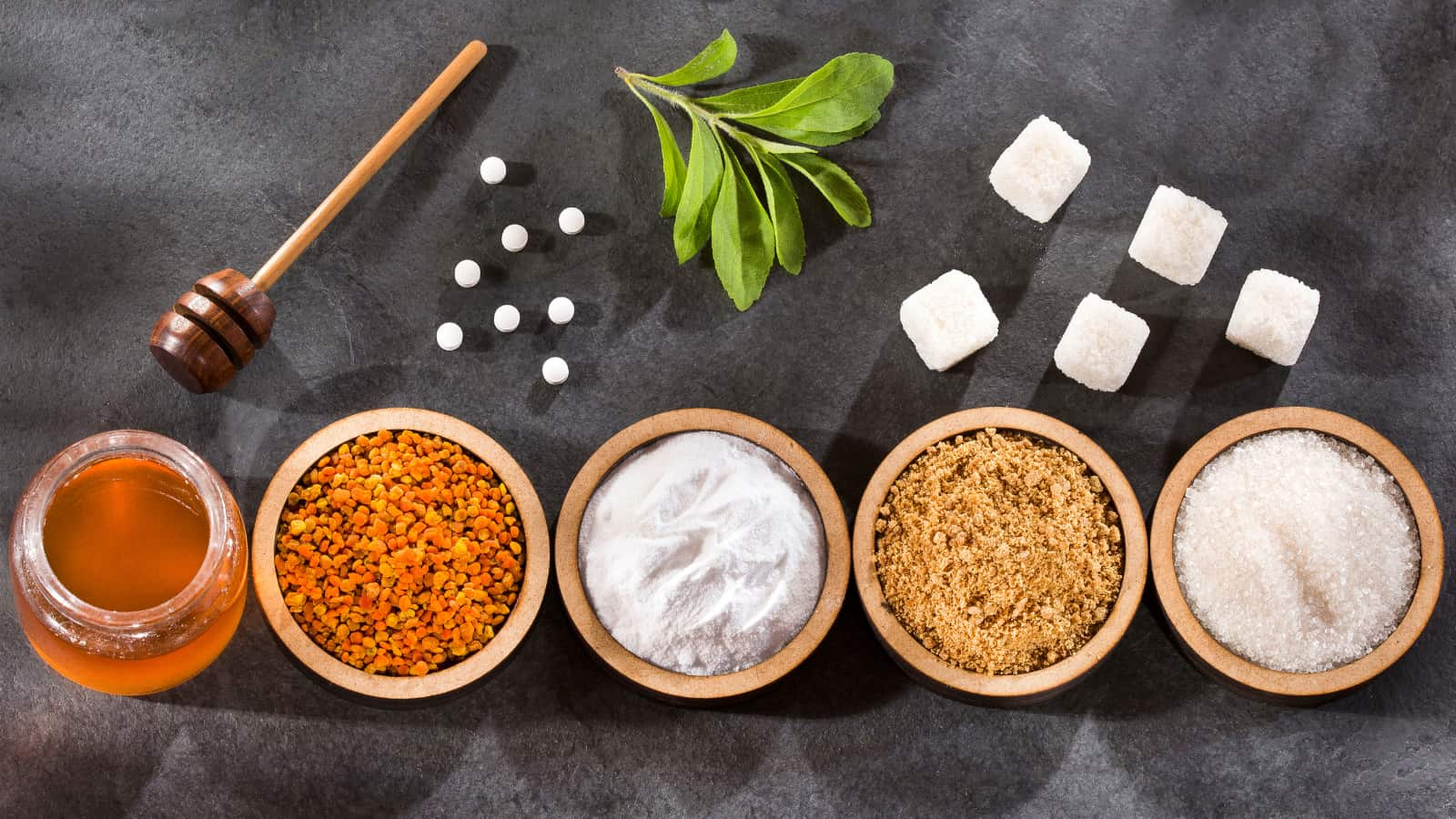
On the market today you can find a huge variety of substitutes for it, in the form of natural and artificial sweeteners. Besides being used on their own, they're added to foods and drinks, as well as used as a flavor enhancer in some supplements. We often think they're the better choice for our diet because of their low or nonexistent carbohydrate content. But whether sweeteners are really easier on our bodies and figures, or whether it's worth thinking twice before buying – in the lines below we'll compare some of the most common types. And in the article "Why Are RealFood's Collagens Sweetener-Free?" you can learn more about our products.
Sucralose (Splenda)
Nutritional values:
- Calories: 0
- Carbohydrates: 0.5 g
- Protein: 0 g
- Fat: 0 g
- Glycemic Index: 0
The most intense sweetener on our list, sucralose, is about 600 times sweeter than sugar. It's an artificial sweetener made entirely from white sugar through chemical processes. It was discovered last century, and there are reports that this happened due to a mistakenly followed set of lab instructions.
Advantages: Even though it's made from sugar, sucralose is much sweeter, and that's exactly what makes it so attractive to add to various foods, drinks, and supplements.
Disadvantages: Studies on its effects have long been contradictory, but in recent years the findings tend to suggest that, with long-term use, it negatively affects certain aspects of health. It's precisely because of the many concerning findings that in 2023 the World Health Organization issued a warning about the potential consequences of the artificial sweetener.
A study from 2020 observed the disappearance of certain bacteria in the gut microbiome of female mice fed sucralose during pregnancy and lactation, which increases the likelihood of inflammation. In addition, the sweetener has also been linked to a higher rate of mutation in E. coli and the bacteria responsible for the onset of Crohn's disease. Weight gain, and body fat in particular, is also one of the effects of long-term sucralose intake.
Recent studies add to the reasons for concern about consuming sucralose, finding that it's also not suitable for cooking. At high temperatures, this sweetener interacts with fat molecules and produces harmful substances. With frequent intake, this can also increase the likelihood of more serious complications developing.
Stevia
Stevia is a sugar substitute made from the leaves of the Stevia rebaudiana plant, which grows mainly in South America. Its sweetness is about 200 to 400 times stronger than that of sugar.
Nutritional values:
- Calories: 0
- Carbohydrates: 0 g
- Protein: 0 g
- Fat: 0 g
- Glycemic Index: 0
Advantages: While the plant's raw leaves haven't been studied enough, the processed extract is used by diabetics – it contains no carbohydrates and wouldn't raise blood sugar. It also has antibacterial and antioxidant properties and can be used in sweets and in tea, since it holds up at high temperatures.
Disadvantages: In recent years some studies have found a correlation between regular stevia intake and ongoing stomach bloating and acidity, but the conclusions on the topic are still debated.
Because stevia is a diuretic, it makes fluids pass through the kidneys more quickly – meaning valuable electrolytes such as magnesium and potassium aren't retained for as long, which can bring on some of the side effects described elsewhere. As a diuretic, it also affects blood vessel dilation and lowers blood pressure. In people who normally have low blood pressure, symptoms like dizziness are possible, so it's a good idea to consult a specialist on the topic before use.
A 2016 study also found that high amounts of steviol cause human sperm cells to produce higher doses of progesterone (a hormone abundant in the female body), which could also trigger other hormonal changes in the male body.
Monk Fruit Extract
Also known as the „Buddha fruit“, monk fruit is a plant from which a naturally sweet extract is derived. The antioxidants known as mogrosides are responsible for the sweetness of the monk fruit.
Nutritional values:
- Calories: 0
- Carbohydrates: 0g
- Protein: 0g
- Fat: 0g
- Glycemic Index: 0
Advantages: A clinical study on rodents shows that those fed yogurt sweetened with a monk fruit extract had improved blood sugar regulation and significantly reduced insulin resistance compared to rats fed yogurt sweetened with white sugar. Compared to other sweeteners added to foods and drinks, monk fruit shows minimal, but still better, results with regular use in humans.
Disadvantages: This sweetener has been on the market for a relatively short time, and studies of its effects on humans are still limited. In addition, since its sweetness isn't as intense, the finished extract sold in stores is usually blended with other, stronger sweeteners.
Saccharin
Saccharin is one of the „oldest“ sweeteners. It gained huge popularity right after the First World War, amid the sugar shortage, and its use in the US dropped sharply in the 1970s, when some concerning details about it came to light.
Nutritional values:
- Calories: 0
- Carbohydrates: 0
- Protein: 0 g
- Fat: 0 g
- Glycemic Index: 0
Advantages: Even though it has a zero glycemic index, saccharin is about 500 times sweeter than sugar and is chosen for its resistance to high temperatures.
Disadvantages: As of today, saccharin doesn't appear on the list of banned ingredients of the European Food Safety Authority or the World Health Organization, but there's still evidence of a negative effect from its intake. After 5 days of taking saccharin, participants in a 2014 study showed unusually high blood sugar levels for this type of sweetener, along with changes in the composition of their gut bacteria. This suggests saccharin can have an aggressive effect on the gut, disrupt the balance of the flora, and may not be as harmless as it seems.
Dextrose
The sweetener dextrose forms during the chemical processing of corn starch. It's almost identical to glucose, and its glycemic index is significantly higher than that of other sweeteners. It's a quick source of energy, sharply raising blood sugar.
Nutritional values:
- Calories: 4 kcal per gram
- Carbohydrates: 1 g
- Protein: 0 g
- Fat: 0 g
- Glycemic Index: 100
Advantages: Dextrose is often used in sweet baked goods because it has the property of browning faster. On the other hand, it quickly "charges" the body with energy and is favored by active athletes after an intense workout.
Disadvantages: The side effects of dextrose are similar to those of taking white sugar – fat buildup, heaviness in the stomach, worsened skin condition in the form of inflammatory processes, disrupted structure, and cellulite. Cardiovascular problems and the onset of insulin resistance also can't be ruled out, due to its direct effect on the blood. The high glycemic index and the rise in blood sugar, in turn, are sometimes also responsible for weight gain and fluid retention.
Erythritol
Another sugar alcohol on our list – erythritol, is one of the most widely used sweeteners. It occurs naturally in some fermented fruits, but for industrial purposes it's produced through chemical processes.
Nutritional values:
- Calories: 0.24 kcal per gram
- Carbohydrates:
- Protein: 0 g
- Fat: 0 g
- Glycemic Index: 0
Advantages: This sweetener has the main, complex qualities of most similar substances. It's easily absorbed in the intestines and enters the bloodstream – which is why it's so widespread and preferred. Like some other sweeteners, it has the property of „cleansing“ bacteria in the mouth, has a low glycemic index, and is suitable for diabetics.
Disadvantages: The latest studies show erythritol to be a cause of gastrointestinal irritation and an easier onset of certain bacteria. When the gut flora changes, side effects very often don't go unnoticed. Bloating, more acidity, and a lingering unpleasant aftertaste can occur.
Another negative effect of long-term intake of the sweetener is seen in the cardiovascular system - its consumption is linked to an increased risk of blood clot formation and cardiovascular disease, including stroke and heart attack. A three-year study tracked the condition of a total of 3000 people after taking added erythritol sweetener. The results confirm the negative effects, with people who took the highest concentration being twice as likely to have a heart attack at some point in the future compared to the rest.
If we can give you one piece of advice, it would be to avoid sugary foods as much as possible and turn instead to foods, drinks, and supplements with as clean and well-tested a composition as possible. Still, when choosing something to sweeten your food or drink with, it's a good idea to be careful and do your research beforehand. Not every sweetener is a better alternative to sugar, and the fact that they contain no calories doesn't make sweeteners the ideal solution for weight loss.