









Post Contents [hide]
Why is collagen beneficial as a dietary supplement?
Collagen is the most abundant protein in our body. There are 28 types of it found in our organs. Types 1, 2, and 3 are the most common. They build the skin, bones, muscles, and joints, and support tissue elasticity. After we turn 25, its production starts to decline, and the combination of a poor diet, smoking, inactivity, and excessive sun exposure means its deficiency affects our overall health even more. That's why many people look for ways – through supplements and lifestyle changes – to boost their body's natural production. Most often, the choice comes down to hydrolyzed collagen powder or a ready-made drink, a shot with dissolved protein.
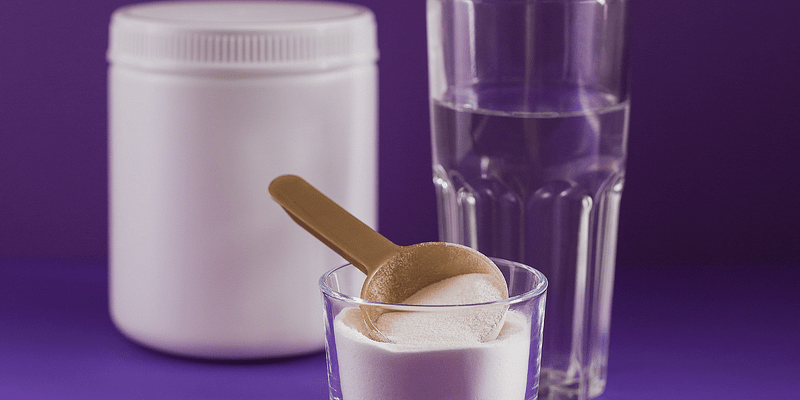
Hydrolyzed collagen powder is often recommended for several reasons: it's easy to measure out, it dissolves in both cold and hot liquids, and it's absorbed faster and more easily than, say, gelatin. In practice, this means you can make your own collagen drink at home.
You can choose whichever form suits you – powder or ready-to-drink – by getting familiar with the most important pros and cons of both forms of collagen as a supplement. Let's start with origin, since the benefits the protein offers depend on it.
Origin of collagen
Collagen can be of animal or marine origin. Hydrolyzed collagen powder is mainly bovine, sourced from pasture-raised animals. It contains collagen types 1 and 3. Type 1 is found throughout the body and is most concentrated in the bones, tendons, skin, hair, nails, and the lining of the gut. Type 3 collagen is found in the skin, muscles, and blood vessels. The combination of types 1 and 3 makes bovine collagen best suited for overall health. This type of supplement is suitable for people who eat meat.
Most liquid collagens are of marine origin and are sourced from jellyfish, sea sponge, or seafood. Marine collagen is mostly type 1, but it also contains some amount of type 2. Type 2 is found in cartilage, joints, tendons, and spinal discs.
There's also hydrolyzed marine collagen in powder form, as well as liquid collagen products of bovine origin, so it's important to read the label carefully. If your diet only includes vegetables and fish, then look for fish collagen.
In both cases, it's important to check the label for the protein's origin – whether it comes from pasture-raised animals, or from fish or seafood raised and caught under sustainable fishing conditions. Collagen drinks are usually made with hydrolyzed collagen powder, so the real question is whether to choose a ready-made shot or make your own "coffagen" (coffee with protein) or smoothie.
Dosage
The recommended daily intake of collagen is between 10 and 20 grams, and it's easily measured with the scoop that comes with a pack of hydrolyzed collagen powder or a sachet.
Most liquid collagens contain under, or up to, 10 grams, because ready-made drinks usually contain additional ingredients as well. This is technologically necessary. If you look at the first ingredient on most conventional liquid supplements, it's naturally water. This is why it's hard to get a precise dose of collagen from a pre-made drink, unless you measure it out yourself.
This, of course, depends on the brand, but it's hard to find one that gives you the collagen you need in a single serving of liquid supplement. So, if you drink collagen drinks, you may need to take more than one dose – a larger or double dose, depending on the packaging – to reach the saturation you need.
Composition
Pure collagen powder has no taste, no smell, and dissolves quickly and unnoticeably in water. And it tastes like…water. This is a single-ingredient supplement – it contains only protein and needs no preservatives. Preservatives are added to drinks to extend their shelf life, protecting them from spoilage caused by microorganisms.
The choice is often between pure collagen and a protein drink with a long list of ingredients such as sugar, vitamins and minerals, fruit extracts, stevia or another sweetener, electrolytes, tea, oils, caffeine, and the aforementioned preservatives. Still, it's more pleasant to drink a strawberry-flavored protein drink than tasteless water with dissolved collagen…But there's no guarantee about the origin of that long ingredient list, nor about whether it contains the necessary quantity and quality to support the drink's effectiveness and bioavailability. We encourage you to read the ingredient lists of the products you consume and to look into the established standards for the recommended daily doses of individual components.
Of course, there's also multi-ingredient collagen powder, which may include nutrients and phytonutrients that support its action and absorption in the body – e.g. vitamins C and E, biotin, turmeric, sulforaphane, hyaluronic acid, and so on. Just make sure all the ingredients are of the premium quality you're looking for.
The best and safest choice is a collagen with as clean a composition as possible, and if you'd like to add flavor, you can mix your daily dose of protein powder into a smoothie or juice. Keep in mind that it's more efficient and convenient to get all the collagen you need in one precisely measured dose, rather than making compromises.
Collagen on the go
A popular view is that a ready-made daily dose of liquid collagen drink is the fastest way to get your daily dose of this valuable protein. That's true. Even though it weighs a bit more, a bottle of liquid collagen easily fits in a handbag. But don't forget that collagen powder is also available in daily-dose sachets, which are an ideal solution for the office or while traveling – light, compact, and convenient. And all you need to do is pour yourself a glass of water 😊
Bioavailability
Bioavailability research, relevant to better collagen absorption, has been conducted using hydrolyzed collagen powder. There's no scientific evidence that liquid collagen is better than powdered collagen. Both liquid and powdered supplements consist of collagen peptides, which are the result of hydrolysis. This process breaks down raw collagen so it can be absorbed by the body. Once it reaches peptide form, it becomes bioavailable – meaning its bioavailability is proven.
In short, the collagen peptides contained in protein drinks are processed by the body in the same way as those in powder form.
More (value) for a better price
Collagen powder comes in packs meant to last 20-40 days, with a scoop for the exact daily dose. It's also available in sachets, which you can easily fit even into a small bag.
Liquid collagens usually come in single-use plastic bottles. And although they're more accessible, they're actually more expensive because of the cost of the packaging. Last but not least, single-serving doses generate more plastic waste, unlike a longer-lasting pack of collagen powder.
In short
Hydrolyzed collagen powder is often preferred for several reasons:
- You get a fuller dose of collagen, hand-measured according to the instructions;
- You get a supplement with a guaranteed clean composition, with fewer or no additives;
- You save the environment from even more plastic or packaging waste, regardless of type;
- You can always create your own liquid collagen to your own taste, with controlled composition, and add it to your favorite fresh drink.
This doesn't mean that all liquid collagen products are ineffective. The challenge lies in the impact of the auxiliary ingredients and in the often unclear list of ingredients and their amounts in light of the recommended daily doses.
Sources: Liquid Collagen vs. Powder: Pros, Cons & Which Is Better | mindbodygreen, Liquid Collagen vs Powder: The Complete Comparison Guide (cbsupplements.com), Liquid Collagen vs Powder (indigocollagen.com) Liquid Collagen vs Powder: What's The Difference? | Care/of (takecareof.com)



