Collagen is one of the most talked-about topics in health nutrition and supplementation. But behind the trend lie real questions:
When should you drink collagen? How is it absorbed? Is there a difference between regular collagen and collagen peptides? When is collagen suitable for joints, and when for skin?
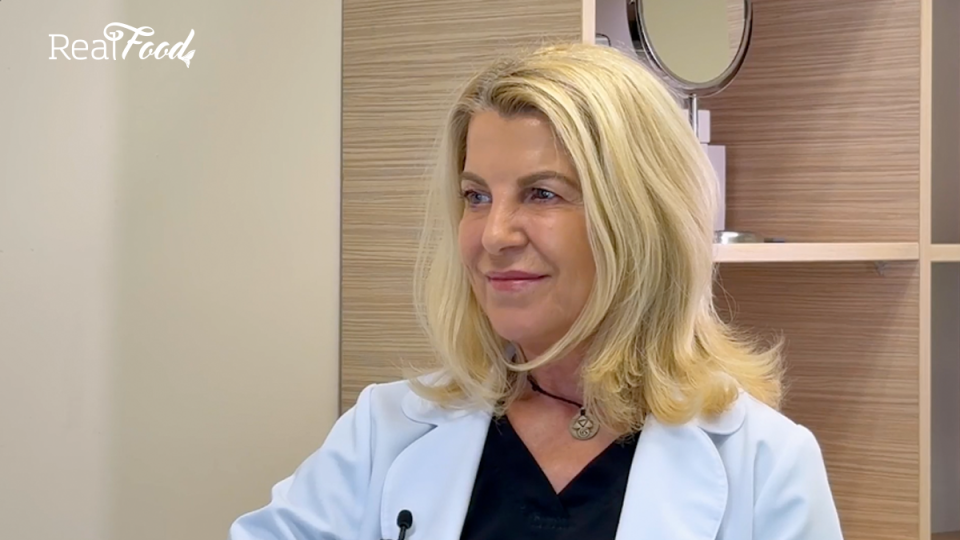
To bring clarity, we spoke with Dr. Silvia Paskaleva – a physiotherapist and dietitian with years of clinical experience, including in the field of nutrigenetics. In her practice, she actively works with cases related to joint discomfort, active sports, recovery, and nutritional deficiencies. The topic of collagen isn't just theoretical for her – it's part of her everyday work with patients.
In this article you'll discover:
- when we start losing collagen and what the early signs are
- how collagen peptides are absorbed and why hydrolyzed collagen is preferred
- what role collagen plays for joints, ligaments and tendons
- how collagen and protein are combined in an active daily routine
- what the most common mistakes are when taking it
- and how to make an informed choice of a quality product
🌟 30,000+ customers drink RealFood collagen every day
„After 30 days my skin changed completely” – Milena, customer
Start your collagen routine with RealFood →✓ Free shipping ✓ Clinically tested ✓ Made in Bulgaria
What Is Collagen and Why Do We Lose It After Age 25?
Collagen is the most abundant protein in the human body. It builds:
- the skin
- hair and nails
- joints, ligaments and tendons
- connective tissue
The first signs of reduced synthesis are often subtle – lower skin elasticity, brittle nails, hair loss. But these are relatively late signals.
„Statistically, we already start gradually losing collagen after age 25.“ – notes Dr. Paskaleva.
We also pay attention to genetic predisposition. Dr. Paskaleva shares that the European population, including Bulgarians, tends toward faster destruction (breakdown) of collagen. This means one thing: prevention is more important than waiting for symptoms.
Recommended by a specialist
„On average, we already start gradually losing collagen after the age of 25.”
— Dr. Silvia Paskaleva, physiotherapist and dietitian
Recommended products:


When Should You Take Collagen and For How Long?
Collagen is a supplement with a preventive character. Many people stop taking it after a month because they „don't see results.“ But collagen isn't a product with instant effects. It needs time to build up and be synthesized.
Why Doesn't Collagen Work „Right Away“?
Expecting a quick effect is the biggest myth.
„Collagen is a macromolecule. It takes time to build up in order to achieve results.“ – comments Dr. Paskaleva.
Collagen participates in processes of tissue regeneration and maintenance. These are slow, physiological processes. A realistic approach includes:
- consistency
- adequate water intake
- movement
- a balanced diet
How Is Collagen Absorbed and Why Does the Hydrolyzed Form Matter?
For years there was a claim that collagen „isn't well absorbed“ because it's a large molecule.
„Modern technologies have made it possible to hydrolyze collagen – breaking it down into smaller peptides that are absorbed much more easily.“ – Dr. Paskaleva
Hydrolyzed collagen is a form in which the molecule has already been broken down into smaller structures. This helps it pass through the gastrointestinal barrier and improves absorption.
In most cases it can be taken at any time of day – in a smoothie, milk or juice. An exception applies to those with a sensitive digestive system, where taking it on an empty stomach may be more suitable.
Collagen and Protein – Competitors or Partners?
The roles of collagen and protein are often confused.
„They complement each other. They don't exclude each other.“ – notes Dr. Paskaleva
Protein supports the building and recovery of muscle tissue. Collagen supports the structure of connective tissue – ligaments, tendons, joints.
Practical Tip From the Interview
Collagen – can be taken before a workout.
Protein – more suitable after a workout for muscle recovery.

Practical Tip
„Collagen and protein complement each other. They don't exclude each other.“
— Dr. Silvia Paskaleva, physiotherapist and dietitian
Do Our Daily Habits Affect Collagen Absorption?
„Collagen loves water and loves movement.“ – Dr. Paskaleva
- The recommended water intake is about 30–33 ml per kilogram of body weight per day.
- Lack of movement increases the risk of problems with joints and tendons.
Another factor is sugar. Excessive intake of refined sugars negatively affects collagen structures. Limiting them is part of overall care.
Is Bone Broth Enough?
The short answer: no.
Modern diets rarely provide sufficient amounts of collagen. Bone broth can be part of a balanced diet, but it usually doesn't cover the body's needs – especially as we age.
How to Choose a Quality Collagen?
According to Dr. Paskaleva, it's important to:
- consult a specialist for specific needs
- pay attention to the form (hydrolyzed collagen)
- check the content of vitamin C and zinc, which support synthesis
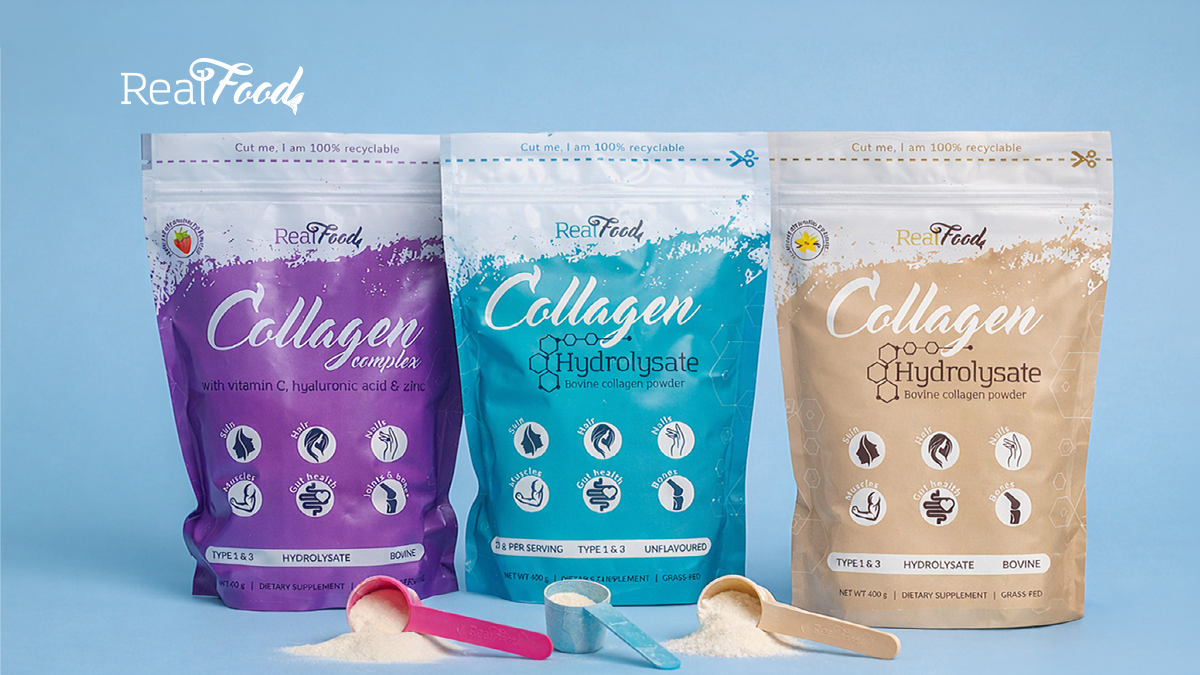
She herself shares that she has chosen RealFood Collagen Complex, because of its formula and composition.
Why RealFood Collagen Complex?
Dr. Paskaleva openly shares her personal experience:
„The formula was the best fit for my case. I've been taking it for more than a year now, and it's part of my daily routine.“
RealFood Collagen Complex contains:
- hydrolyzed collagen
- vitamin C
- zinc
- hyaluronic acid
- a light natural strawberry flavor
- no sweeteners
The combination helps maintain skin, hair, nails and joints – as part of a balanced diet and an active lifestyle. Check out RealFood's other collagens too.

Final Advice From Dr. Paskaleva
What to remember from Dr. Paskaleva:
- start before you have symptoms
- be consistent
- combine it with movement and hydration
- choose wisely
Collagen doesn't stop time. But it can be part of the care that slows down these processes and supports the body from within.