In the midst of vacation season and warm weather, we continue diving deep into a topic that mainly concerns the female audience, and which becomes especially relevant in summer – cellulite. A few days ago, together with Tyana Presolska, owner of the Duppisima beauty salons and chairwoman of the Association of Medical Cosmeticians in Bulgaria, we unfolded the discussion, and she answered some of the most common questions and gave practical advice from her professional experience. Inspired by the conversation, we'll walk you through this condition in a bit more detail and look at the methods for reducing it.
You can watch the full interview on our YouTube channel here.
What Is Cellulite?
Cellulite (also known as lipodystrophy) is an uneven accumulation of subcutaneous fat tissue, which is what causes the visible irregularities on the skin (orange-peel skin). Cellulite is usually seen on the thighs, buttocks, and abdomen – that's because people, and especially women, tend to store more fat in exactly those areas.
It „comes“ in many different types and stages of development – there's a soft type (usually with reduced muscle mass), a fibrous type (with more developed musculature), an edematous type (fluid retention and circulation problems), and its stages indicate how strongly each type manifests.
Cellulite is often a source of concern because it's sometimes seen as something unpleasant and unnatural. But the truth is exactly the opposite – this subcutaneous formation occurs in nearly 90% of women worldwide who have gone through puberty, which proves it shouldn't be a reason for shame or low self-esteem, especially at the beach.
What Causes It to Appear?
Cellulite is a condition whose appearance and future development can be influenced by many factors. One of them is hormonal imbalance. The female hormones estrogen and progesterone are among the main indicators of its appearance – the presence of high estrogen levels is often a cause. Also, as women age, in the period around menopause, increased levels of cellulite are observed precisely because of the major hormonal changes that occur.
Another reason for the appearance of orange-peel skin, specifically in women, is the larger amount of fat tissue the female body contains – it builds up to protect the fetus in the event of a future pregnancy. This is also a natural protective function of the body, in which more fat is usually noticed around the buttocks, thighs, and abdomen.
„It's normal for women to have around 17-24% body fat, while for a man it's approximately 14-17%.“, Tyana explained.
Fluid retention and weight gain are also among the causes of its appearance. When the body fails to eliminate excess fluids and toxins, they build up and the lymphatic system struggles to clear them. This leads to the subcutaneous fat bulging in places, making the skin look wavy on the outside.
Busting the Myths
Although the topic is quite popular and widely discussed, there are still claims about cellulite for which science has a different answer. Let's look at some of the „myths“ associated with the appearance of cellulite.
„Cellulite only appears in people who don't exercise“
We can't agree. Having cellulite is far from meaning that a person lives an unhealthy lifestyle and doesn't move. Not always. Besides eating highly processed foods and reduced movement, as mentioned above, cellulite can also appear under the influence of many other factors – genetic predisposition, hormonal imbalance, fluid retention. A large-scale clinical study concludes that the presence of the HIF1A gene is a key prerequisite for the appearance of cellulite at some point in the future, regardless of lifestyle, and it's very likely that its transmission across generations leads to genetic predisposition.
„Only women have cellulite“
Yes, women are more prone to developing cellulite due to the presence of the female hormones estrogen and progesterone. Unfortunately, this is a fact that almost every woman faces sooner or later. But no, women aren't the only ones who can develop this condition. Although rare, it's possible for it to be noticeable in men as well.
„If it's normal for women to have a little cellulite, when men have it – that's already a problem. This points to elevated estrogen in the body, which they mostly get through food.“, Tyana shared during our interview.
She added that in women, the connective-tissue fibers are arranged in parallel, which makes it easier for fat to bulge upward, while in men they form a net-like structure that holds the subcutaneous fat more firmly in place. In addition, studies show that women's skin is more prone to cellulite because it has up to 34% fewer collagen fibers to „secure“ its firmness. Putting all these factors together, we can say it isn't impossible, but it also isn't typical, for men to develop cellulite.
Which Cosmetic Procedures Will Improve Cellulite?
The procedures aimed at reducing orange-peel skin are varied, addressing the different types of cellulite. That's exactly why, before undergoing such a therapy, it's good to make the right decisions - to consult a specialist who can recommend and put together an individual program for the specific case.
Among the most popular and time-tested are anti-cellulite massages. They're preferred because of the direct contact between the professional's hands and the client's skin, and they're usually also a more budget-friendly option. They offer firming and smoothing of the skin, but their drawback is that the effect is short-lived.
Another buzzworthy procedure is lymphatic drainage. This type of procedure is also a massage, but one that's recommended for the earlier stages of cellulite. That's because, again, the effect isn't long-lasting, but it's aimed at the lymphatic system and removing the retained water and toxins from it, rather than at the subcutaneous fat itself.
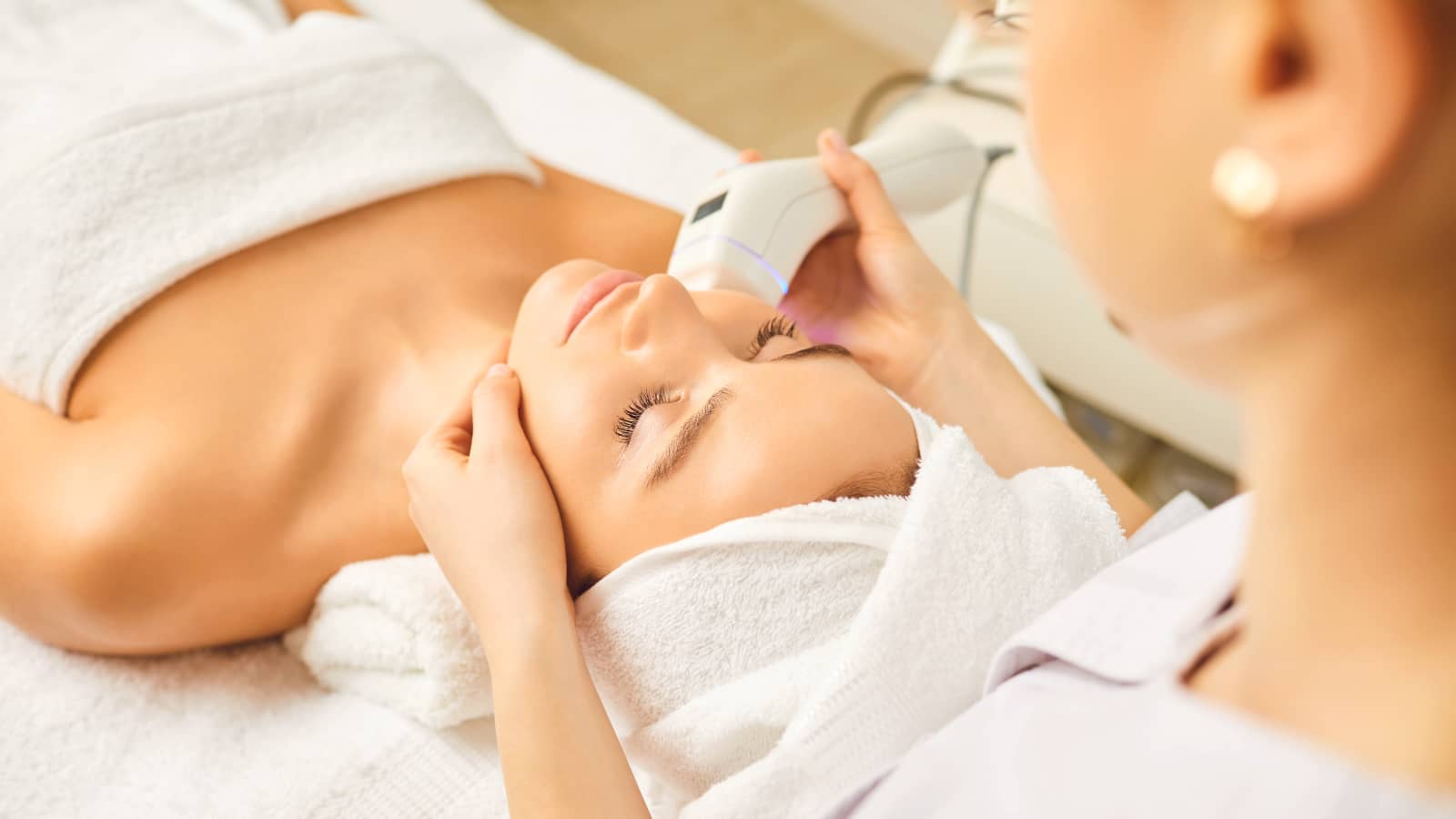
A popular procedure is also endosphere therapy. It involves therapy with a device that generates low-frequency mechanical vibrations, which work on the accumulated clusters of fat cells.
Under the effect of this micro-vibration and deep compression, the tissues become oxygenated, blood circulation improves, and a draining effect is achieved. This procedure, like the others, requires consistency and motivation in order to see a final positive effect that lasts over time.
As Tyana commented: „The procedures are just the tip of the iceberg.“ In other words, for the treatments to work the way we want, it's not enough to be consistent only with them – we also need to follow a more active, healthier lifestyle. To eat according to what satisfies our body and skin, to limit some heavy, high-carb foods, and to get enough fluids and substances that support the skin from within.
With that in mind…
How Will Collagen Help With Cellulite?
One of the main causes of cellulite is loose connective tissue. When it fails to hold the fat tissue in place, the fat bulges up unevenly and the result becomes visible. As we know, about 70% of the skin consists mainly of type 1 collagen. If our body lacks this protein, the result is drier, saggier, acne-prone skin, as well as more cellulite. Regularly supplying the skin with the collagen it needs keeps it more resilient, both to external conditions (injuries, sprains) and to internal processes.
Taking hydrolyzed collagen also supports the synthesis of the body's own collagen and elastin, and in the long run this would have a visible effect. Of course, the causes and treatment methods will differ from person to person, but as we age, our body's collagen „reserves“ start to decline, and women also experience drastic hormonal changes around menopause. The combination of these factors directly affects the synthesis of natural collagen and elastin, and when we actively give our body what it's missing, we may be able to compensate for the natural decline in protein.
„Over the years, we start breaking down more and more protein in our body. With menopause, accordingly, women start suffering from loss of muscle and bone density, while their diet contains an insufficient amount of protein, and I believe that taking collagen is essential“, Tyana added on the topic.
Conclusion
Cellulite appears as a result of many factors and is one of the most common conditions among women. It would be hard to prevent its appearance at some point in the future, but there are some „helpers“ we can turn to in order to reduce it. We'd define the individual approach as the most important form of care – a personal approach and consultation with a specialist will work best for reducing cellulite, while consistency is the accompanying element that will keep the effect for longer.