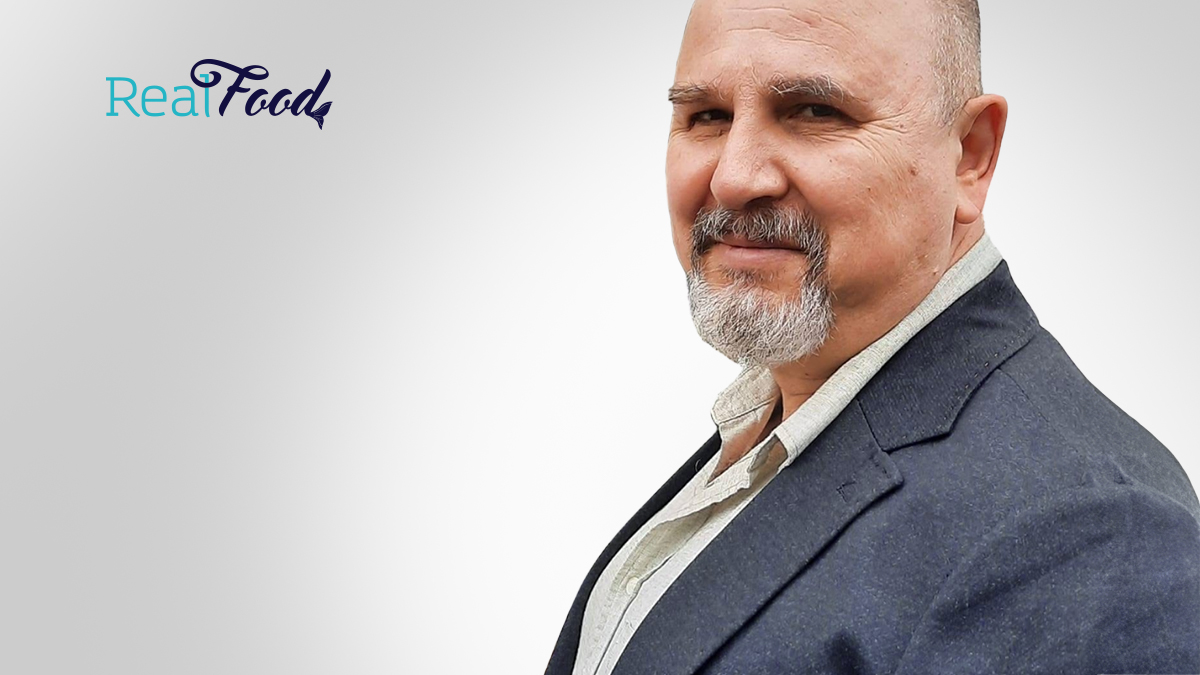
Interview with Milen Tsonev – clinical psychologist, specialist in Psychosomatics
Autoimmune diseases often sound like a biological mystery – the body „attacks“ its own cells. But why would it do that? What's happening on a deeper level? And can the psyche have an influence?
To shed light on this complex topic, we spoke with Milen Tsonev – a clinical psychologist specializing in Psychosomatics. In this article we introduce you to the topic and the connection between mind, biology and emotional memory.
What is psychosomatics?
Milen starts from the basics: psychosomatics is not an abstraction. Psyche and soma – mind and body – always act together. Not as separate systems, but as one whole that constantly tries to adapt us to our environment.
When does the body start to react?
Milen emphasizes that the body reacts when we have no solution in the mind. The basic principle in psychosomatics is that when the psyche finds no way out, the body reacts in its place.
Autoimmune diseases: what's actually happening?
Milen is categorical – there aren't „two points of view“: medical and psychosomatic. There is one process that can be interpreted in different ways. He explains that the body is made up of four tissue layers, each of which reacts through a strictly defined evolutionary mechanism – through:
- an increase in tissue, followed by inflammation and breakdown
or
- degradation of tissue, followed by inflammation and recovery.
These reactions are often interpreted as autoimmune processes. But according to Milen, they are special biological programs, shaped by evolution. The body doesn't „make a mistake“. The body is executing a program.
Simple examples for complex processes
To make this clear, Milen gives some concrete examples:
- When we „can't swallow“ something
The tonsils need to enlarge in order to produce more fluid that helps us swallow. Then comes the recovery phase – tonsillitis.
- When we have an unpleasant contact or the loss of a pleasant one
The skin – the most recently evolved tissue – dries out to become less sensitive. It then recovers through inflammation – various skin and allergic reactions.
In both cases, the body destroys its own cells – a process that medicine often calls „autoimmune“.
Emotional patterns in autoimmune diseases
Milen clearly points to the basic pattern described in textbooks:
A deep conflict between the parents during the period:
- before conception,
- during pregnancy,
- and around the time of birth.
But he emphasizes: this isn't a template to be applied mechanically. You can't say: „Since the parents used to argue – that means there will be an autoimmune disease.“ The body chooses different reactions in different people.
What about suppressed emotions, responsibility, and control?
These conditions can lead to imbalance – both mental and physical. But they aren't necessarily a cause of autoimmune disease. They are simply „background conditions“ that can complicate reactions without determining them.
What is stress according to psychosomatics?
Milen emphasizes that stress is not the cause. Stress is a reaction. It represents a rise in hormones – adrenaline, noradrenaline, cortisol – but that is a consequence of unresolved issues.
In psychosomatics, „conflict“ means:
- an unexpected situation,
- a dramatic situation,
- a feeling of isolation (as if it's happening only to us),
- a situation in which we don't know how to react.
If the situation repeats, the body builds a strategy – a program that activates every time there is a „reminder“. This is how functional changes come about.
Can psychological work influence the immune system?
Milen: Yes – because it changes the reaction to the situation.
Milen isn't a doctor, but through questions and working with a given person, he helps uncover:
- what the first situation was,
- what one's attitude toward it is,
- and whether it can be changed.
He emphasizes:
When cortisol rises, the immune system drops. The body enters „war“ mode – blood and lymph flow toward the muscles, while the internal organs are left with weaker blood supply. Changing the internal reaction is the only real way to reduce this process.
First steps toward inner change
According to Milen, the first and most important step is to accept that everything that happens to us happens for something better.
Not as comfort, but as an opportunity for:
- understanding,
- change,
- learning,
- relief.
He notes:
We shouldn't blame ourselves – nor others. Everyone has their own path and their own pace.
When the body speaks and the mind stays silent
Milen closes with a simple but powerful image.
Imagine a rude person walking toward you.
If we were taught as children how to react – we'll have a solution.
If not – the body will start to speak:
- blushing,
- increased blood pressure,
- a racing pulse,
- tension,
- adrenaline.
The body reacts where the mind has no strategy.
What to remember from Milen?
Milen Tsonev's words lead to one clear truth: the body never acts randomly. It reacts where the mind has no solution, and behind every symptom lies a lived situation we didn't have the resources to process. Autoimmune processes, in this sense, are not our enemy but a program – a biological attempt to cope with something the psyche failed to resolve. The path to change doesn't begin with a fight, but with understanding: to stop blaming ourselves, to see which event triggered the reaction, and to choose a new attitude toward it.
.jpg)