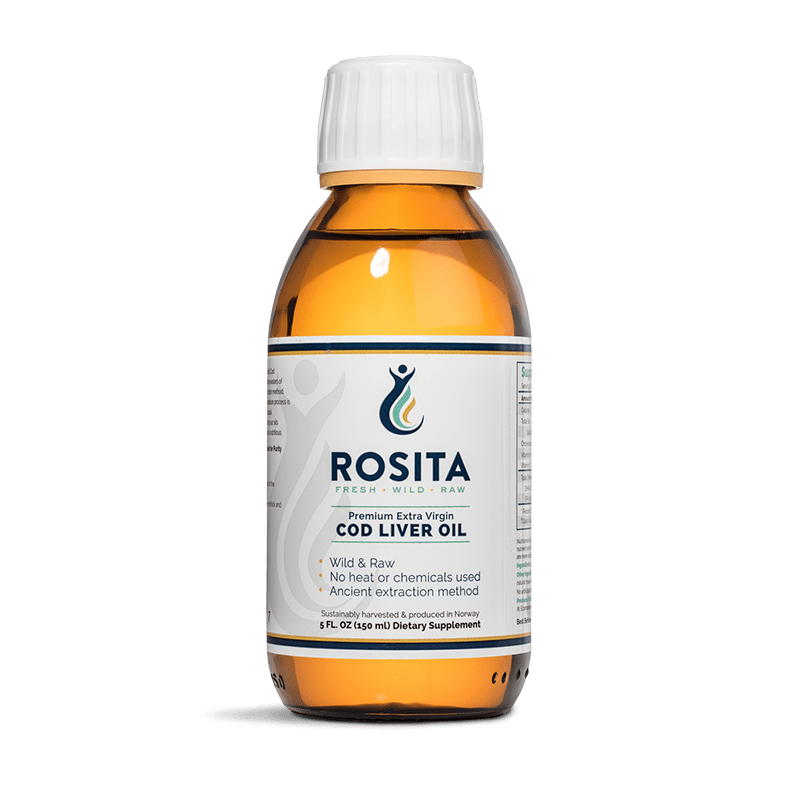
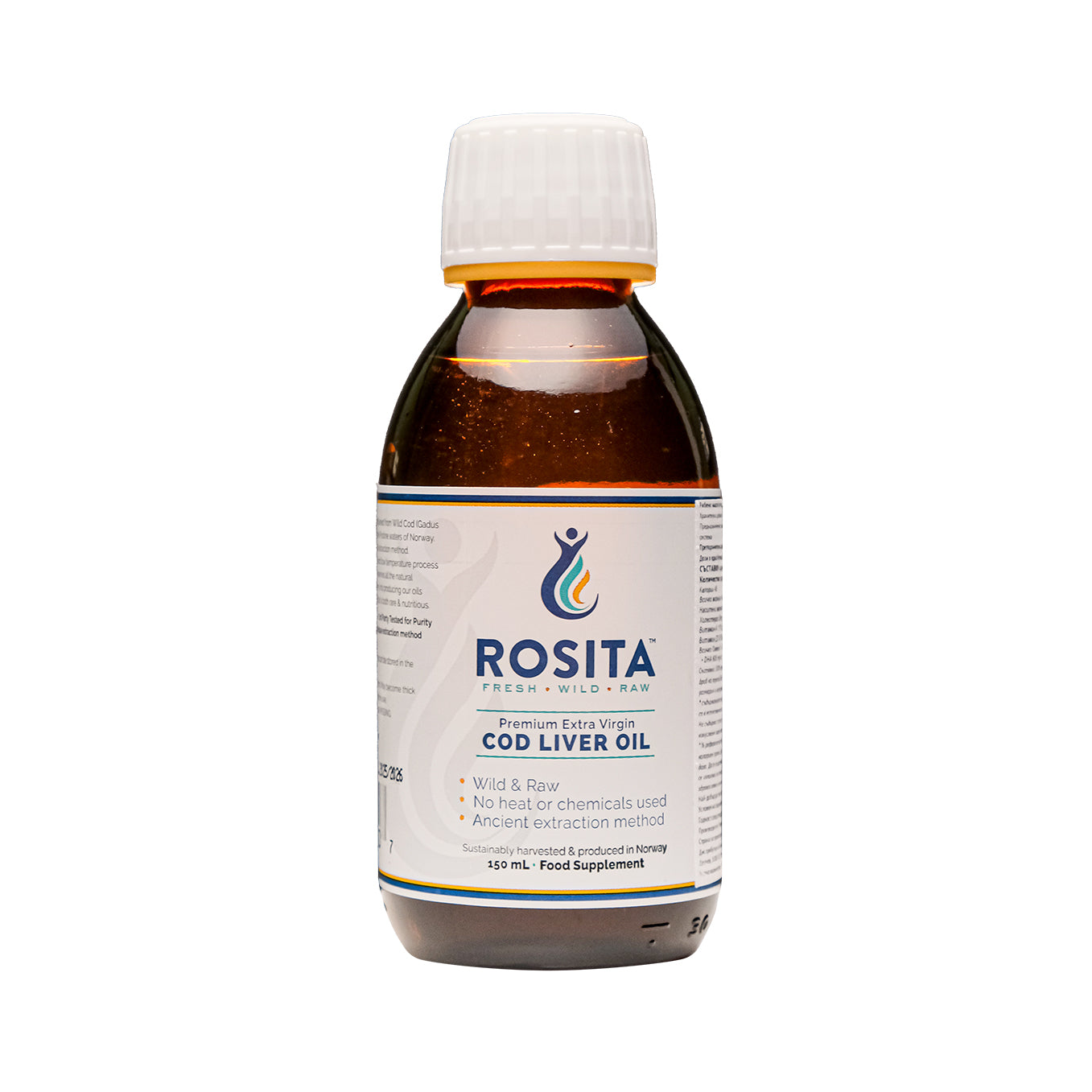
Origin of Rosita Fish Oil
Rosita is a family company located on the island of Donnøya in Northern Norway, where the deep fjords still boast some of the purest ocean waters in the world.
The population of North Atlantic cod (Gadus morhua) in Norway continues to grow each year thanks to strict regulations for maintaining water purity and the environment.
The Rosita family is an old family, descendants of Scandinavian fishermen. The family tradition remains alive today, and the method of catching Atlantic cod used by the company is strict and gentle.
A fundamental principle of Rosita, strictly adhered to: before entering the production process, the liver of each caught North Atlantic cod is inspected. If there are doubts about its health and quality, it is removed and does not become part of the final product.
What's remarkable about Rosita is that only 48 hours pass from the moment the fish is caught to the moment the fish oil is bottled.
Catching and Extracting Fish Oil
Ancient Vikings observed an interesting phenomenon when catching fish like cod, chimera, shark, etc. When freshly caught fish is brought ashore by fishermen, its liver is immediately removed. Then something interesting happens: oil begins to naturally separate from the liver. Today, we certainly know the reason – the sharp change in temperature and pressure when the fish is pulled from the ocean depths to land.
Rosita revives this ancient and simple practice of extracting fish oil from the liver of North Atlantic cod. The process is simple but can only be applied to freshly caught fish pulled directly from very cold waters.
The nature of the Rosita fish oil production process excludes the use of heat, mechanical pressure, solvents, or chemicals.
Filtering Contaminants in Rosita Fish Oil
Each batch of Rosita (EVCLO) fish oil passes through its own filtration system, which removes contaminants without using heat and chemicals. The filtration technology is as natural and gentle as the oil extraction method discovered by the ancient Vikings.
It involves a specific type of biological polysaccharide that forms naturally in the ocean and can be found in some marine organisms. This polysaccharide has two valuable qualities:
- It has antimicrobial and antioxidant effects;
- It has the property of attaching to organic contaminants and proteins, after which it can be discarded as a solid protein mass.
The effectiveness of Rosita's filtration technology has been confirmed by a two-year pilot study conducted by the Norwegian Institute of Food, Fisheries, and Aquaculture Research. Subsequently, the method was optimized based on the results of a research project in collaboration with Stockholm University.
Paper Filtration
After the oil has passed through the filtration process to remove contaminants, it undergoes a paper filtration process to remove any remaining fish proteins.
Adding Antioxidants to Rosita Fish Oil (EVCLO)
Due to the lack of natural vitamin E in cod liver oil, it quickly goes rancid. Antioxidants are necessarily added to prevent the oxidation of the finished product.
After consultations with leading researchers and universities, Rosita created a comprehensive program for adding natural antioxidants to cod liver oil. The entire process took 2 years. The company uses the antioxidant properties of organic rosemary and organic vitamin E in a special proportion, which guarantees the freshness of the product during transport, storage, and consumption.
Contaminant Testing
Each batch of Rosita fish oil is tested for organic contaminants (including pesticides), industrial chemicals (polychlorinated biphenyls - PCBs), by-products of the production process (dioxins, furans), heavy metals, and microbiological contamination.
Rosita uses a number of leading European institutes for testing its products, including the "Institute of Aquaculture" at the University of Stirling, Scotland, as well as a number of independent Norwegian laboratories and institutions with extensive experience in marine raw materials and products.
You can view the test results for each batch, performed by EUROFINS and BDS laboratories, at: www.rositarealfoods.com
The results of the conducted tests fully comply with the strict requirements and regulations of the European Commission and the World Health Organization (WHO) regarding environmental contaminants.
Origin of Rosita Fish Oil
Rosita is a family company located on the island of Donnøya in Northern Norway, where the deep fjords still boast some of the purest ocean waters in the world.
The population of North Atlantic cod (Gadus morhua) in Norway continues to grow each year thanks to strict regulations for maintaining water purity and the environment.
The Rosita family is an old family, descendants of Scandinavian fishermen. The family tradition remains alive today, and the method of catching Atlantic cod used by the company is strict and gentle.
A fundamental principle of Rosita, strictly adhered to: before entering the production process, the liver of each caught North Atlantic cod is inspected. If there are doubts about its health and quality, it is removed and does not become part of the final product.
What's remarkable about Rosita is that only 48 hours pass from the moment the fish is caught to the moment the fish oil is bottled.
Catching and Extracting Fish Oil
Ancient Vikings observed an interesting phenomenon when catching fish like cod, chimera, shark, etc. When freshly caught fish is brought ashore by fishermen, its liver is immediately removed. Then something interesting happens: oil begins to naturally separate from the liver. Today, we certainly know the reason – the sharp change in temperature and pressure when the fish is pulled from the ocean depths to land.
Rosita revives this ancient and simple practice of extracting fish oil from the liver of North Atlantic cod. The process is simple but can only be applied to freshly caught fish pulled directly from very cold waters.
The nature of the Rosita fish oil production process excludes the use of heat, mechanical pressure, solvents, or chemicals.
Filtering Contaminants in Rosita Fish Oil
Each batch of Rosita (EVCLO) fish oil passes through its own filtration system, which removes contaminants without using heat and chemicals. The filtration technology is as natural and gentle as the oil extraction method discovered by the ancient Vikings.
It involves a specific type of biological polysaccharide that forms naturally in the ocean and can be found in some marine organisms. This polysaccharide has two valuable qualities:
- It has antimicrobial and antioxidant effects;
- It has the property of attaching to organic contaminants and proteins, after which it can be discarded as a solid protein mass.
The effectiveness of Rosita's filtration technology has been confirmed by a two-year pilot study conducted by the Norwegian Institute of Food, Fisheries, and Aquaculture Research. Subsequently, the method was optimized based on the results of a research project in collaboration with Stockholm University.
Paper Filtration
After the oil has passed through the filtration process to remove contaminants, it undergoes a paper filtration process to remove any remaining fish proteins.
Adding Antioxidants to Rosita Fish Oil (EVCLO)
Due to the lack of natural vitamin E in cod liver oil, it quickly goes rancid. Antioxidants are necessarily added to prevent the oxidation of the finished product.
After consultations with leading researchers and universities, Rosita created a comprehensive program for adding natural antioxidants to cod liver oil. The entire process took 2 years. The company uses the antioxidant properties of organic rosemary and organic vitamin E in a special proportion, which guarantees the freshness of the product during transport, storage, and consumption.
Contaminant Testing
Each batch of Rosita fish oil is tested for organic contaminants (including pesticides), industrial chemicals (polychlorinated biphenyls - PCBs), by-products of the production process (dioxins, furans), heavy metals, and microbiological contamination.
Rosita uses a number of leading European institutes for testing its products, including the "Institute of Aquaculture" at the University of Stirling, Scotland, as well as a number of independent Norwegian laboratories and institutions with extensive experience in marine raw materials and products.
You can view the test results for each batch, performed by EUROFINS and BDS laboratories, at: www.rositarealfoods.com
The results of the conducted tests fully comply with the strict requirements and regulations of the European Commission and the World Health Organization (WHO) regarding environmental contaminants.